Shipping over $50




Most advice on this topic starts with the planet. This one starts with your trash can.
Look in it on a Friday evening, and a good part of what is there came from lunch. Wrappers, a foil dish, two coffee cups, a bottle.
That is where to start. Not with a grand plan. With lunch.
Here are seven habits we use ourselves. None of them costs much, and one of them saves money every week.

What do you switch first?
The bottle. It is the easiest swap, and the one you notice first.
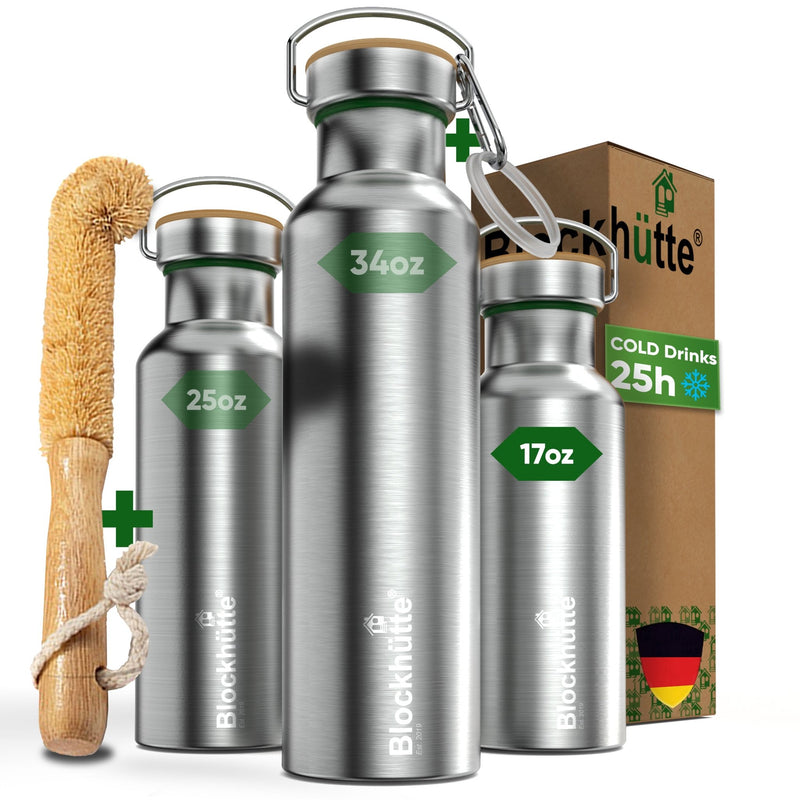
A stainless steel water bottle replaces the bottle from the gas station. And the cup from the coffee counter. Fill it at home, refill it at work. It holds a drink cold for 25 hours and hot for 13, with no preheating.
One bottle, filled every day, and the bottle count in the trash can goes to zero. That is habit one.
What about the food?
Cook it, or at least pack it. That is habit two, and the one that saves money.
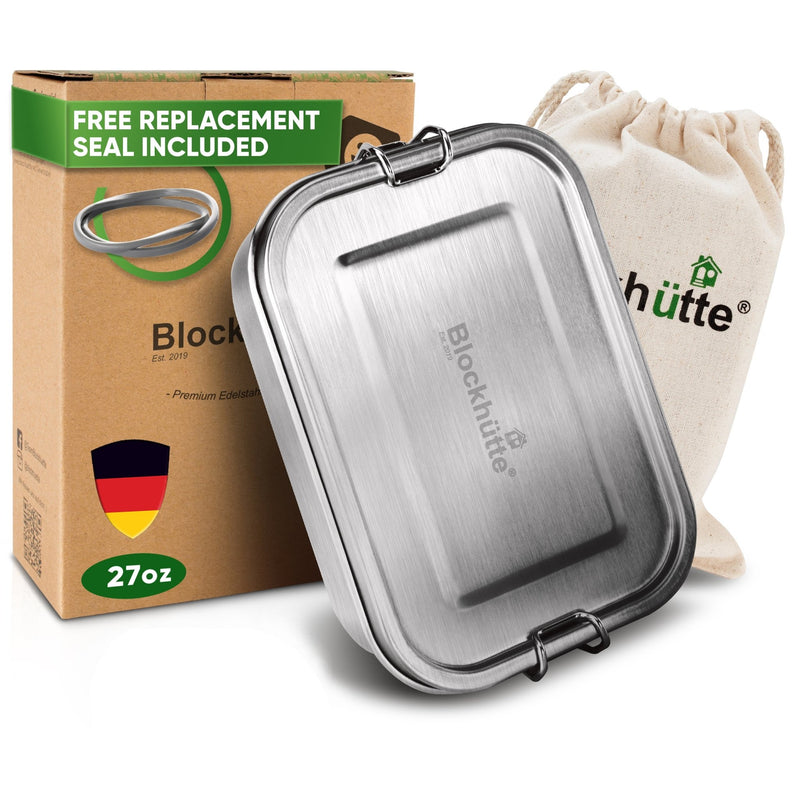
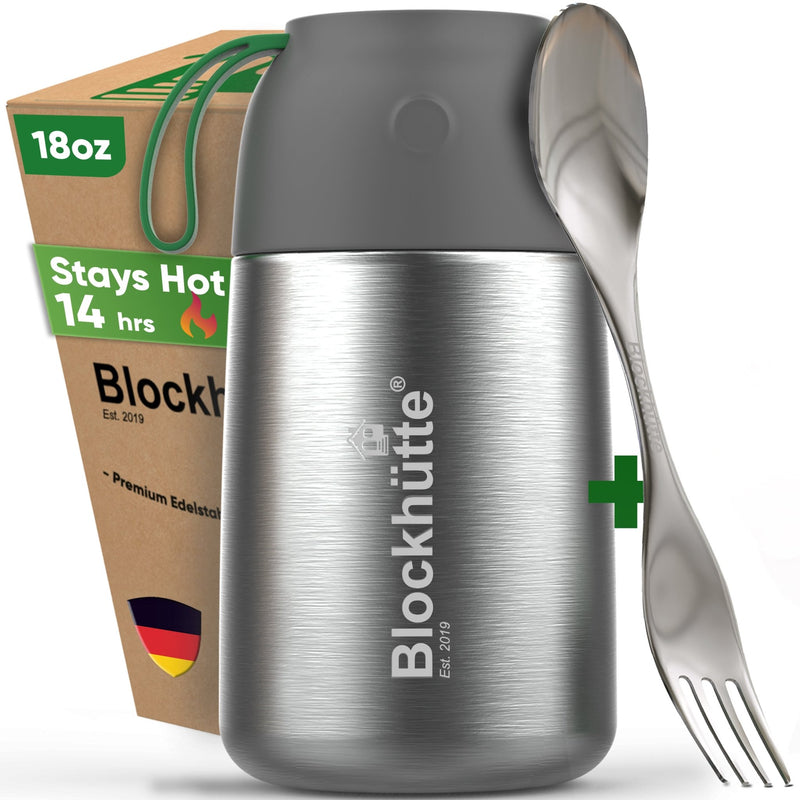
Leftovers from dinner go into a stainless steel lunch box while the pan is still on the stove. Soup or stew goes into an insulated food jar. Rinse it hot first, fill it to the top, and it is still hot at noon. The lid is plastic. It has to seal and survive being dropped.
No foil dish, no delivery bag, no line at the microwave.
Two dividers turn the box into three compartments, so yesterday's rice does not touch today's salad. Pack it in the evening, and the morning gets easier too.

How do you buy with less packaging?
Bring the container. Habit three.
Many stores now have a bulk section, and some have a counter that will fill your own box.
Lentils, rice, nuts, olives go straight into the lunch box, and the box goes into the bag. Nothing to unwrap at home, nothing to throw away.
The same works at the farmers market. A steel box in the bag is lighter than it looks, and the tomatoes arrive in one piece.
Why buy less, and better?
Because the box you keep is the one that never becomes trash. Habit four is to buy once.
A plastic box gets replaced. A steel box gets older. It picks up scratches and the odd dent, and it keeps working. The scratches stay. So does the box.
That is the whole argument, and it is the honest one. Not the material on its own, but the years it stays in use.
Where the box is made, and why the label is not the point: Where Is Blockhütte Made?

Stainless Steel Lunch Box
The stainless steel lunch box for adults that survives a real commute. Two removable dividers...
Get YoursWhat happens when something breaks?
You fix it. Habit five, and the one that needs the right box.
When a seal wears out, you buy a seal. Not a new box. When a cap gets lost, you buy a cap. Every wearing part is sold separately, on our spare parts page. A spare seal is already in the box when it arrives.
Why the seal is the part that decides whether a box leaks: what makes a lunch box leak-proof.
If something fails on its own, the 3-year limited warranty covers material and workmanship. If something wears out, you buy the part. The box stays.

What about the box it came in?
Cardboard. Habit six is ours, not yours.
The packaging is cardboard, recyclable and plastic-free, and as little of it as we can manage.
It goes in the paper bin, and that is the last piece of packaging the box will ever need.
Our stainless steel lunch box, the one with two dividers, is also part of a Plastic Bank partnership. Plastic gets collected at collection points in Haiti, Indonesia and Brazil, among other places.
What do you do with a box you no longer need?
Pass it on. Habit seven.
A steel box that outlasts your need for it is still a steel box. A nephew starting school, a friend starting a job, the neighbor who admired it at the barbecue. Run it through the dishwasher and hand it over.
And if it is truly done, it is steel. Take it to a scrap-metal drop-off, not the trash. Most curbside bins do not take it. Or it gets a second life. A bottle as a vase, a box as a planter for cress on the windowsill.
We like to see those. Send a photo to info@blockhuette.com.
Seven habits, and none of them needs a plan. Start with the bottle on Monday. The rest tends to follow.