Shipping over $50




You bought a bottle to drink more water, and now you want a number. Two refills? Four? Somebody once said eight glasses.
The number exists. It is just not the one most people quote.
Reference intakes for adults sit at about 125 fl oz of total water a day for men. For women it is about 91 fl oz. Total means everything, food included, and roughly a fifth comes from what you eat. As drinks, that is about 13 cups a day for men and about 9 for women. Source: the National Academies.
How much water do you actually need a day?
It depends on your body, your day and your climate. But there is a published starting point.
The National Academies set reference values for total water intake in their Dietary Reference Intakes report on water and electrolytes. For adults they are about 3.7 liters a day for men and 2.7 liters for women. In US units, 125 fl oz and 91 fl oz.
Two things matter about that number.
First, it is total water. Soup, fruit, yogurt and coffee all count. Around 20 percent of the total typically comes from food, not from a glass.
Second, it is a population reference, not a prescription. Body size, activity, heat, altitude, pregnancy and some medical conditions all move it. If you need a personal number, ask a doctor, not a blog.
How many bottles is that?
Now it gets useful. Take the drink portion, not the total, and divide by the bottle you own.
The columns below are daily drink targets: 9 cups, 11 cups and 13 cups. That is roughly the female reference, a midpoint, and the male reference.
| Your bottle | 9 cups (72 oz) | 11 cups (88 oz) | 13 cups (104 oz) |
|---|---|---|---|
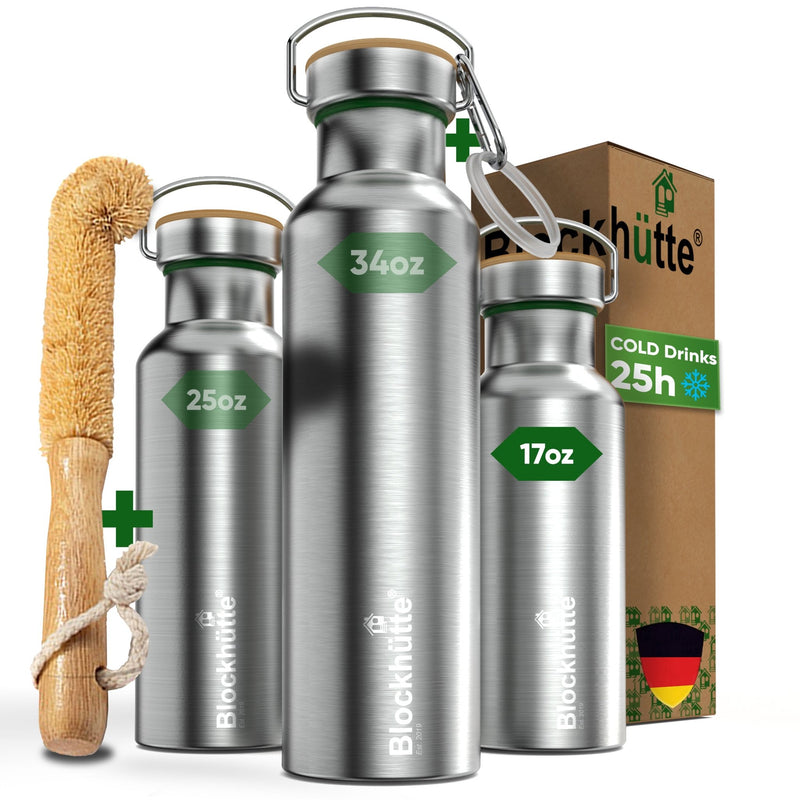
| 17 oz bottle | about 4 refills | about 5 | about 6 |
| 25 oz bottle | about 3 refills | about 3.5 | about 4 |
| 34 oz bottle | about 2 refills | about 2.5 | about 3 |
| 12 oz bottle | about 6 refills | about 7 | about 9 |
Read it as a rough count, not a quota. Coffee, tea and the water in your lunch all move the number down.
Does coffee or tea count toward it?
Yes. That is the part most people get wrong.
The reference values cover total water from all beverages and food, and coffee and tea are beverages. Caffeine has a mild diuretic effect, but at everyday intakes it does not cancel out the fluid you just drank.
So does milk. So does the water in soup, fruit and salad.
What that means in practice: two coffees and a lunch already count. You are not starting the day at zero.
How do you actually hit your number?
Not by tracking. By putting the bottle where you can see it.
Fill it in the morning, before anything else. Put it on the desk, not in the bag. A bottle out of sight is a bottle you refill once, at 4pm, with regret.
Two habits do most of the work:
- One full bottle before your first meeting.
- Refill it every time you get up for something else.
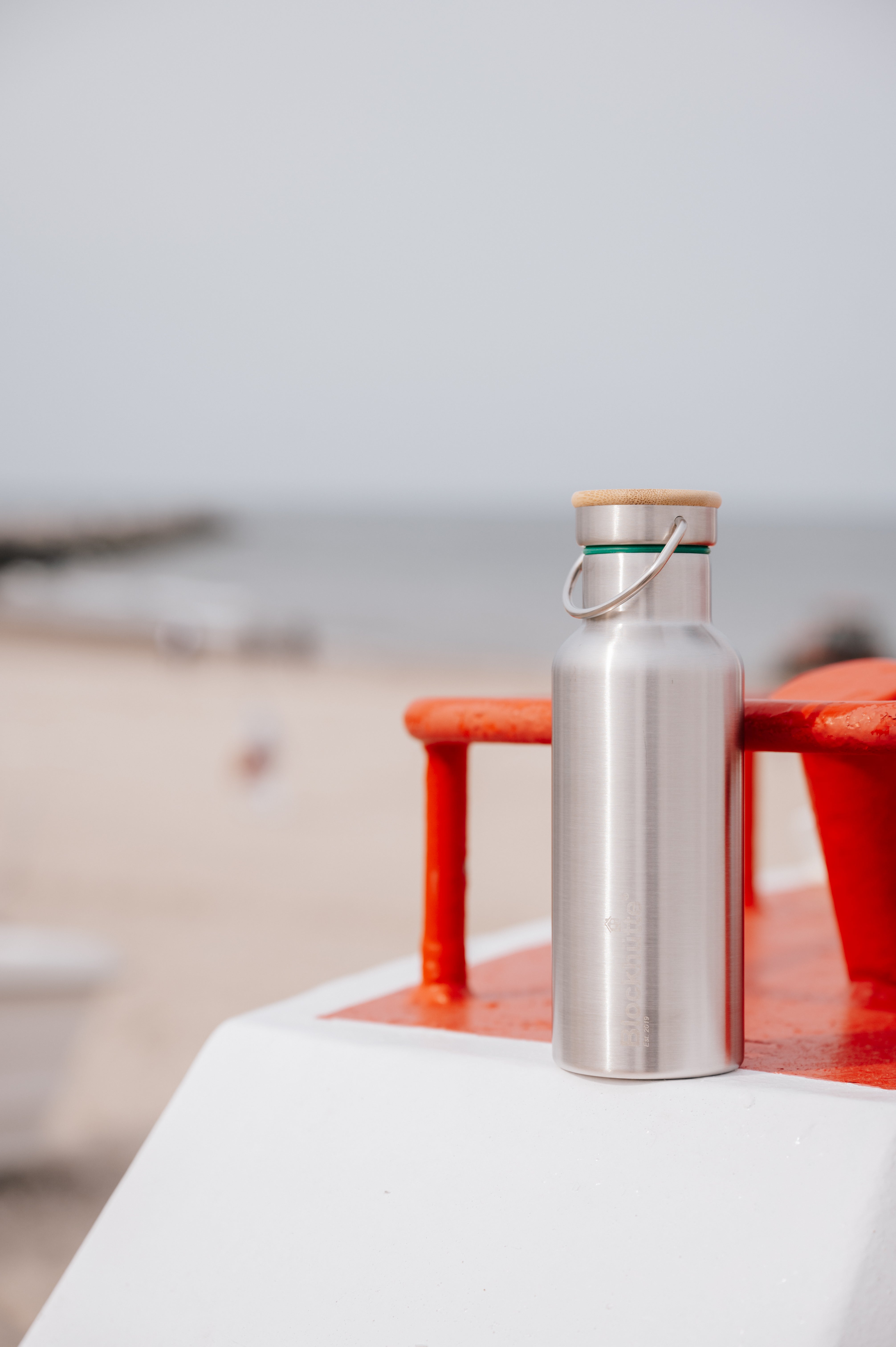
Cold water helps here, and this is the one place the bottle itself matters. Ours holds 25 hours cold, with no preheating. The water you filled at 7am is still cold at 4pm. Warm water in the afternoon is why half-full bottles get abandoned.
All three sizes are in the stainless steel water bottle collection.
Which size to pick, by the bag you carry: Which stainless steel water bottle should I choose?

Vacuum Insulated Stainless Steel Water Bottle
A vacuum insulated stainless steel water bottle for the commute, the desk and the trail....
Get Yours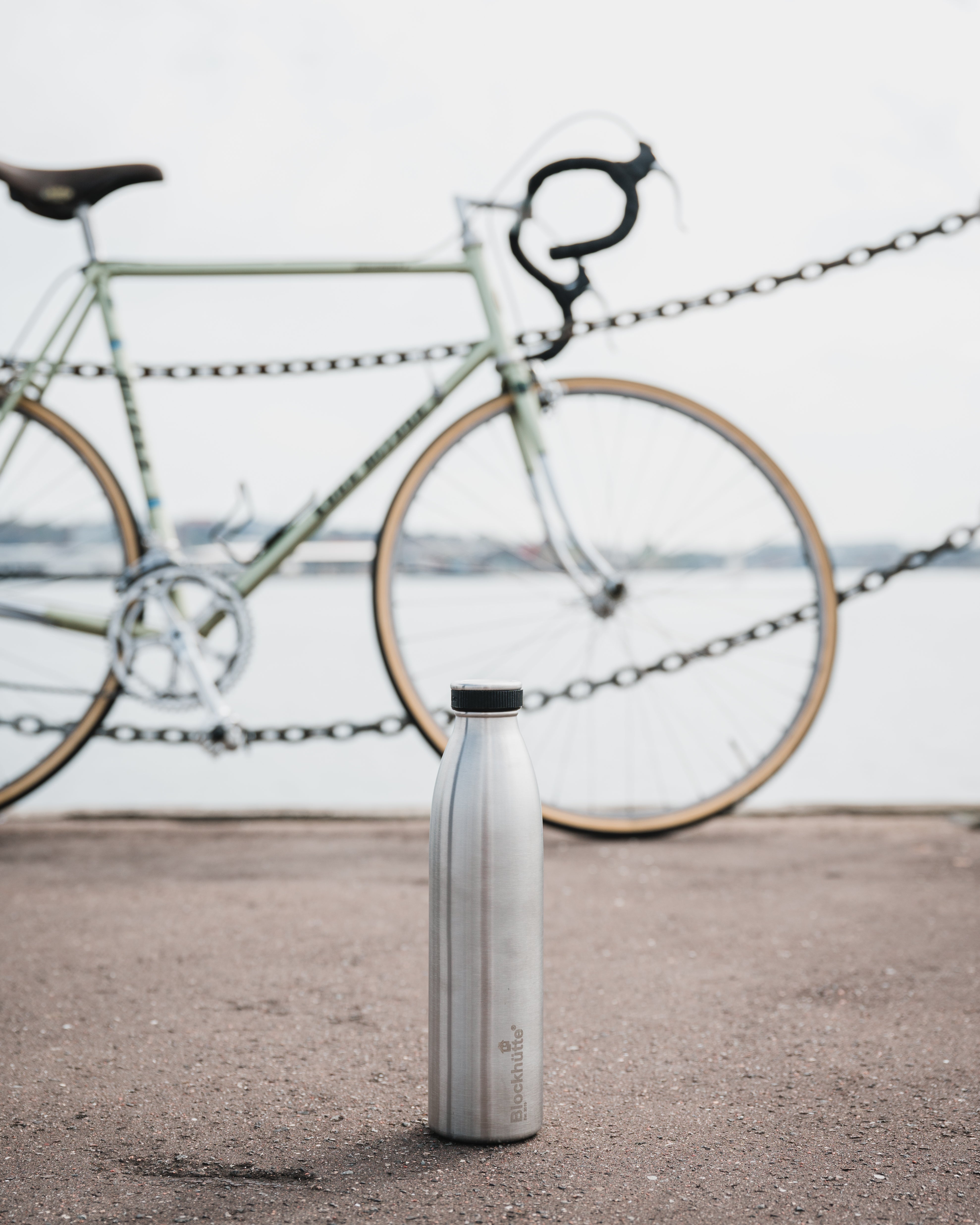
Is a gallon of water a day too much?
A gallon is 128 fl oz, which is above both reference values for total intake.
It is not automatically harmful, and athletes and outdoor workers in heat can need that much and more. But for a desk day it sits well past the published reference. Drinking to a number rather than to thirst is not a goal in itself.
If you want the conversions, we set them out in how many ounces are in a gallon.
What about children?
Children need different amounts than adults, and we are not going to invent a table for them here.
What we can help with is the bottle. Our guide to the best water bottle for kids covers sizes, lids and what survives a school bag.
The short version
About 9 cups of drinks a day for women, about 13 for men. Food adds the rest.
Then it is one bottle, filled in the morning, refilled a few times. That is the entire system. Pick the size you will actually carry, and the counting takes care of itself.
A bottle refilled four times a day wants a quick rinse now and then. The routine: how to care for a stainless steel water bottle.